Built for a gym that teaches four arts on one mat.
Each class carries its art, each fighter carries a rank per art, a striking pack cannot book the grappling class, and the timer on the wall runs rounds. Your head coach still decides everything that matters.
Free plan for small academies. Pro is $79 a month plus 0.49% on payments, unlimited members, no contract.
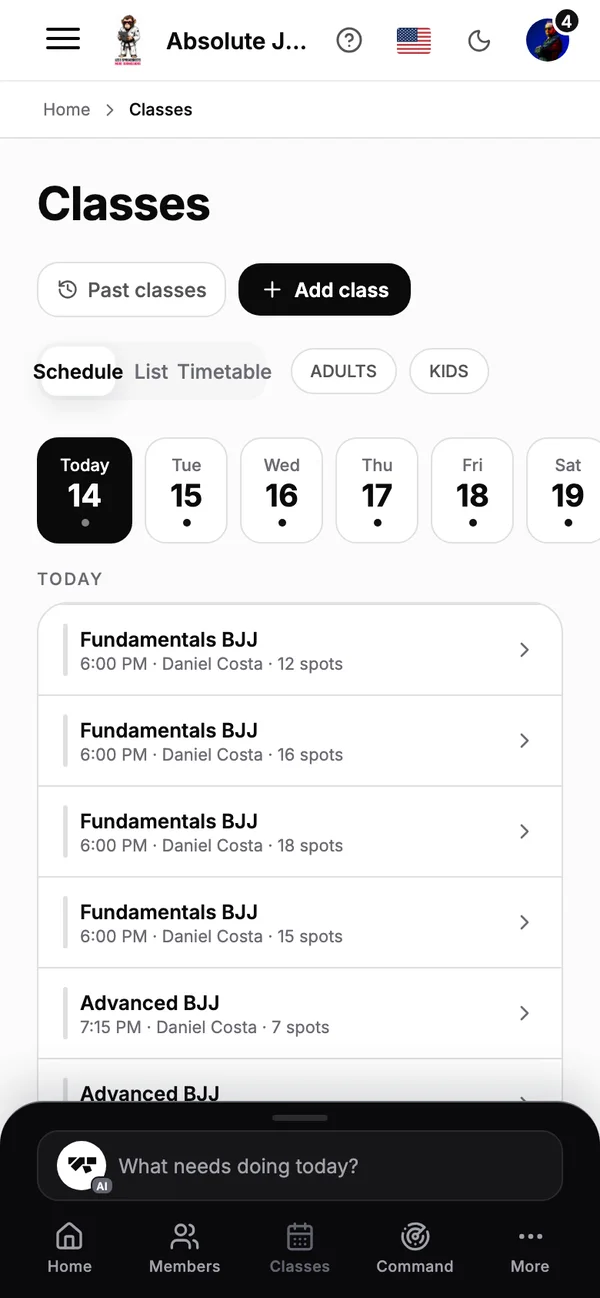
An MMA gym is four gyms sharing a floor: jiu jitsu with belts, wrestling with none, boxing and Muay Thai with their own coaches and their own students. Generic software sees one gym, one class type and one membership.
So the striking-only member books the no-gi class by accident, the blue belt's rank sits in a notes field, and the timer is a phone.
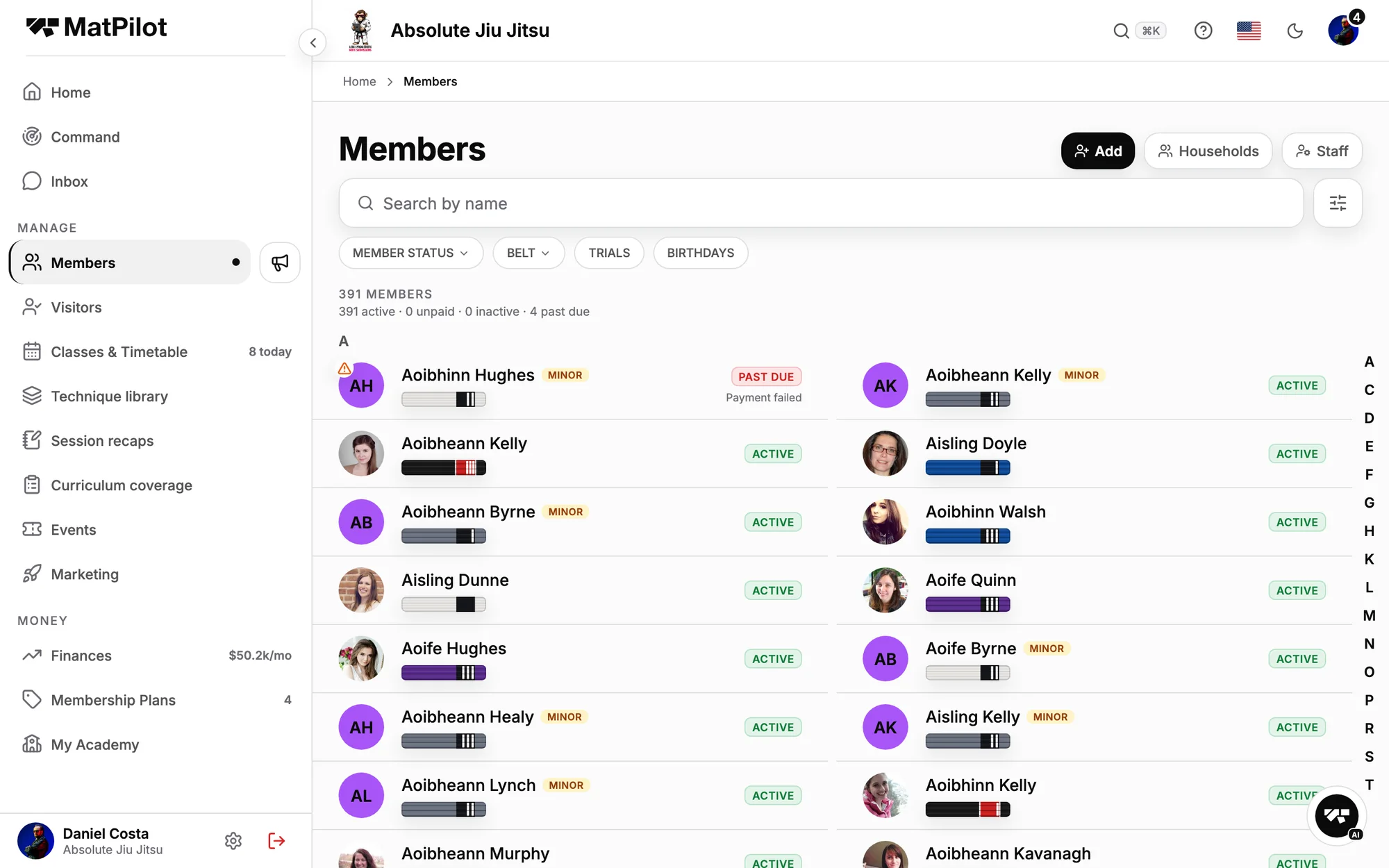
MatPilot was built around arts as a first-class idea: a class has one, a member has several, a membership buys some.
Five things an MMA gym needs its software to understand.
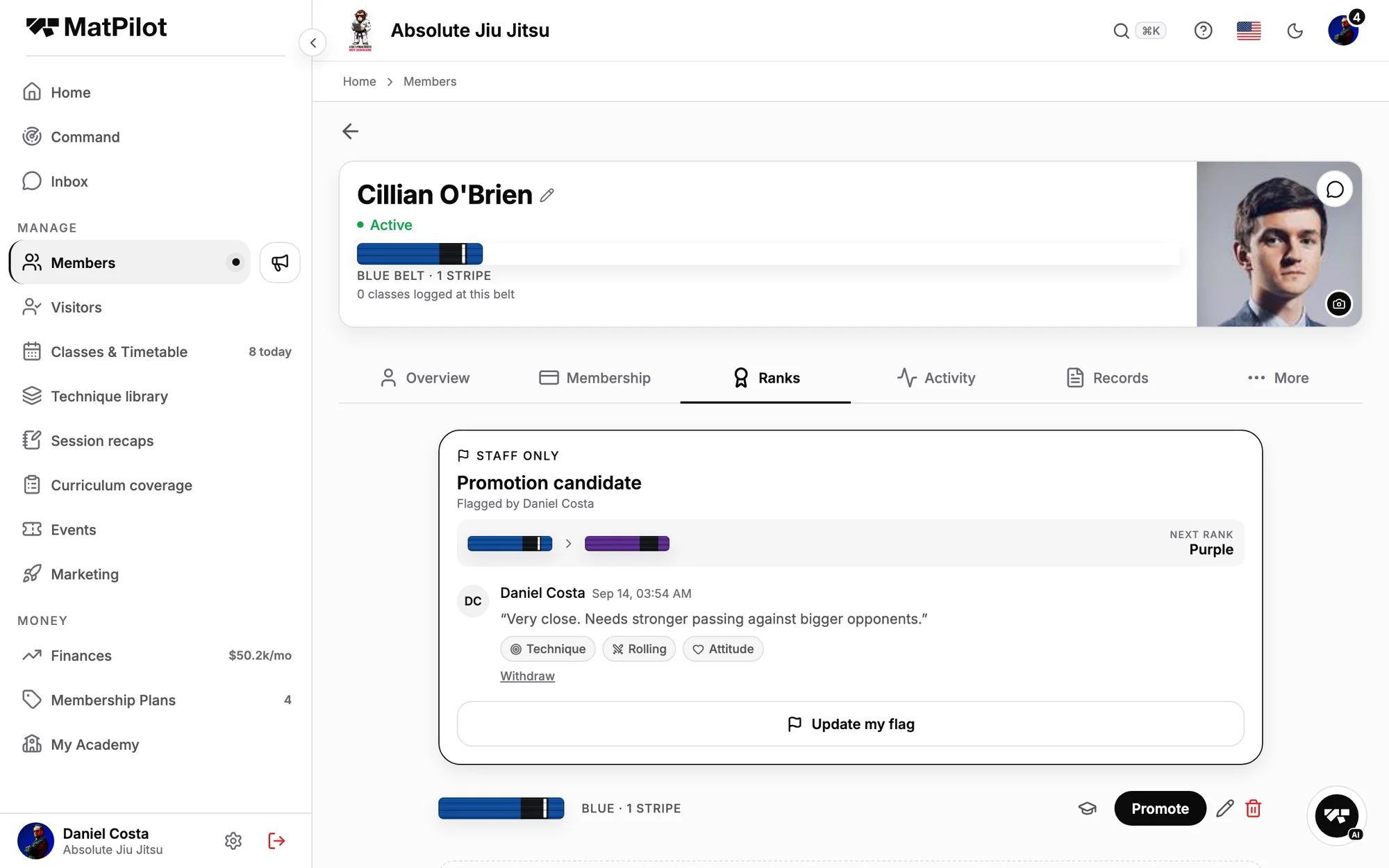
A rank per art, or none
A fighter's profile carries a jiu jitsu belt with stripes, and nothing at all for wrestling, boxing or Muay Thai, because those arts have no rank and the app does not invent one. Nineteen arts are covered, each with its own ladder or none, and a member holds a rank in every art they train.
The promotion shortlist runs per art, for the coaches only. It never says ready.
Memberships that buy the right classes
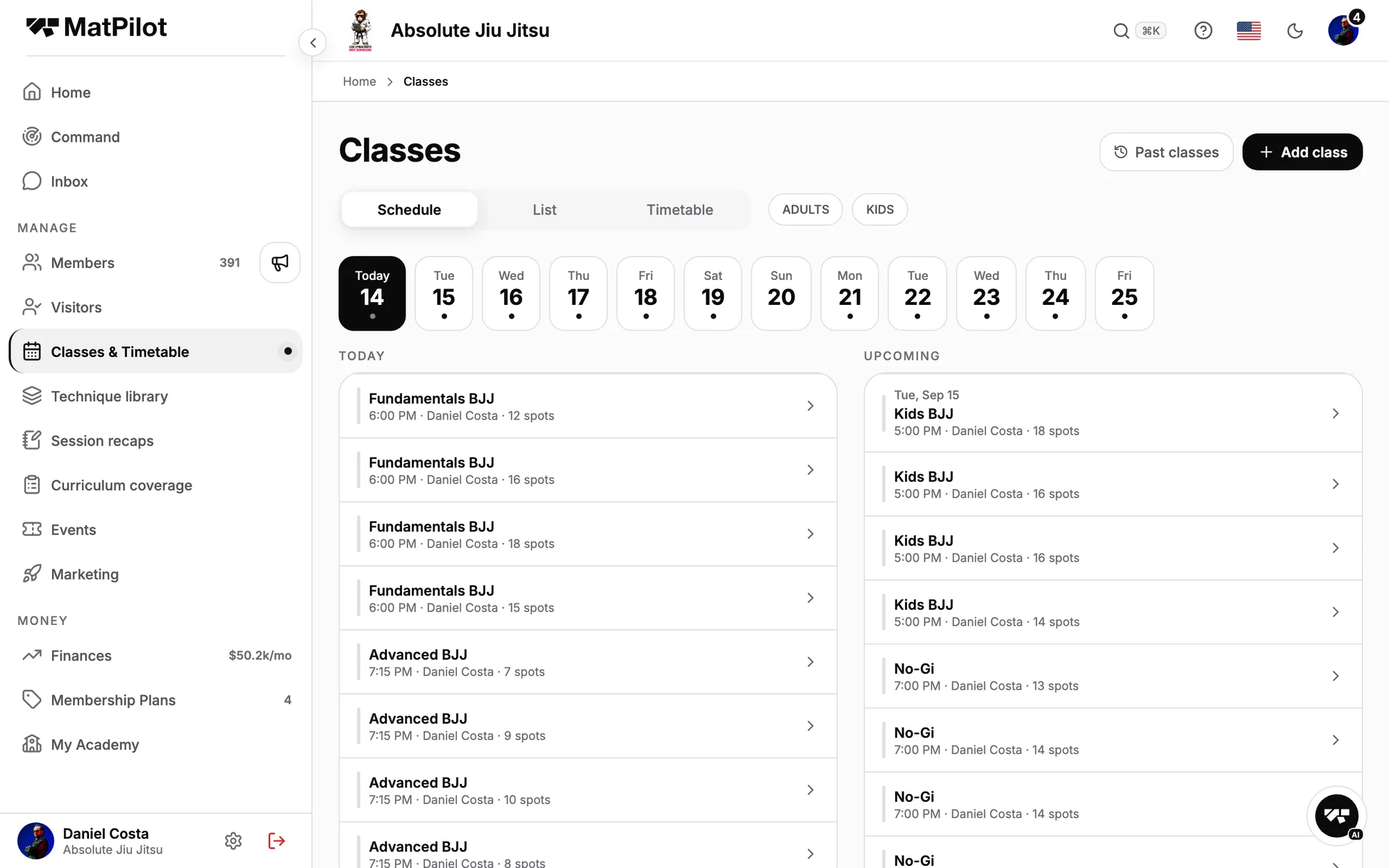
Tag each class with its art. A striking plan books striking classes; an all-access plan books everything; a ten-class pack spends one credit per check-in and covers the arts you say it does. Nobody books a class their money does not cover, and the app shows them why.
Kids and adult classes are gated by age on top.
Fighters who are not members
A visiting fighter in camp buys a single-session pass, signs the waiver on their phone and checks in without joining. A seminar with a visiting coach sells through one link, waiver before the card, members at the member price.
Neither touches your member count or your caps.
The round timer on the wall
TV mode turns any screen with a browser into the gym clock: rounds with rest, Tabata, EMOM, countdown or stopwatch, with bell and clapper cues, and today's checked-in roster beside it. Fighters check in from the app or a kiosk by the door, so the coach sees who turned up.
The same page on a Fire Stick, an Android TV or the laptop by the cage.
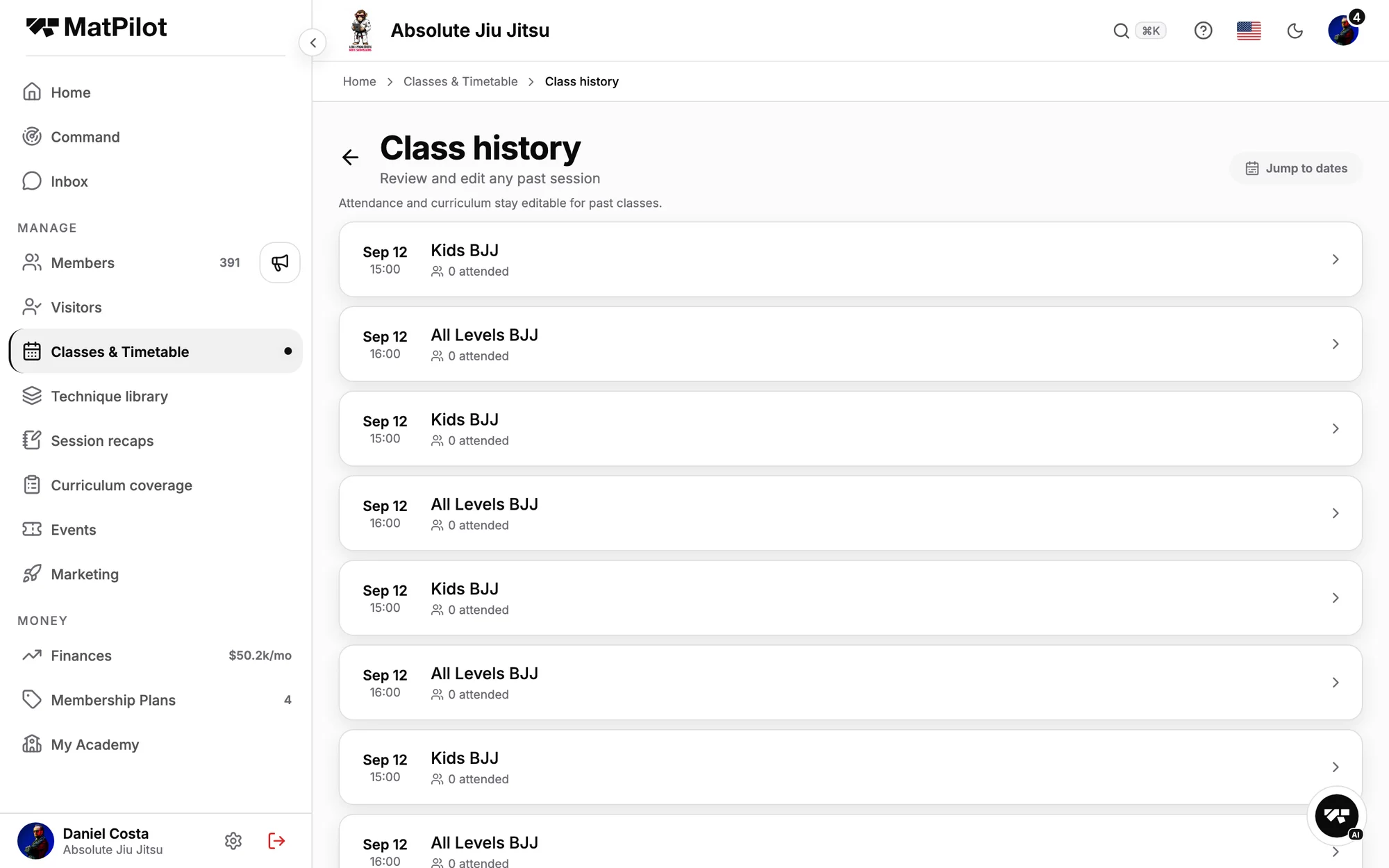
An injury log that follows up
Log an injury from the fighter's profile: tap where on the body, say how bad. A serious one schedules staff check-ins after one, three, seven and fourteen days so nobody is forgotten, and billing can be frozen while they recover. An emergency contact sits on every profile, and the roster can be filtered by who has none.
Chat by discipline on top, so the wrestlers hear about the wrestling seminar and nobody else has to.
arts covered, each with its own ladder or none
timer modes on the wall TV, with bell cues
platform fee on Pro, on top of Stripe's own
for the Free plan, with 2% on payments
Six things you will not find in the usual gym software.
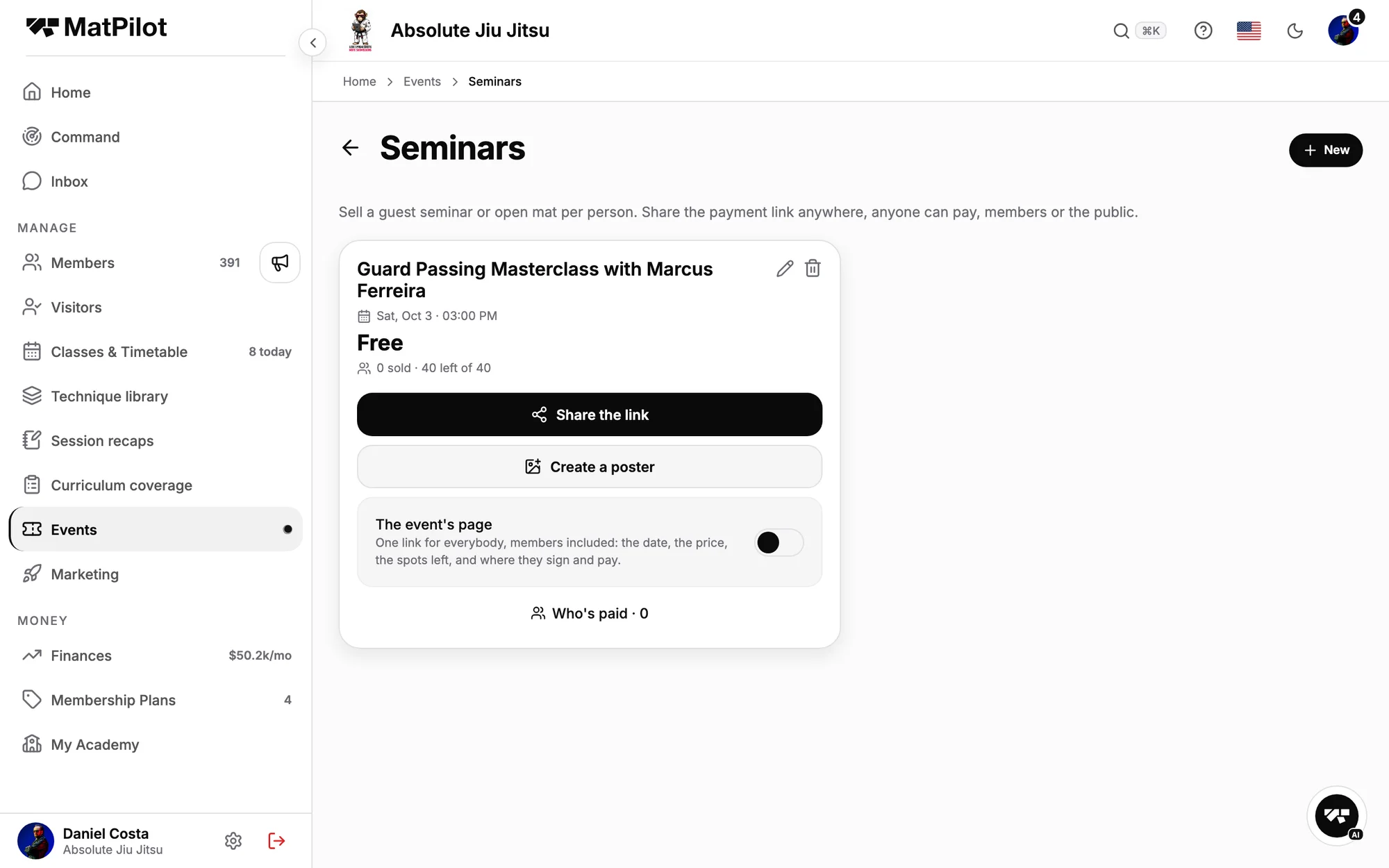
Seminars and courses, waiver firstOne link for a visiting black belt's seminar: register, sign the waiver, then pay, at the member price if you are one. A free seminar needs no Stripe account at all.Read how it works → 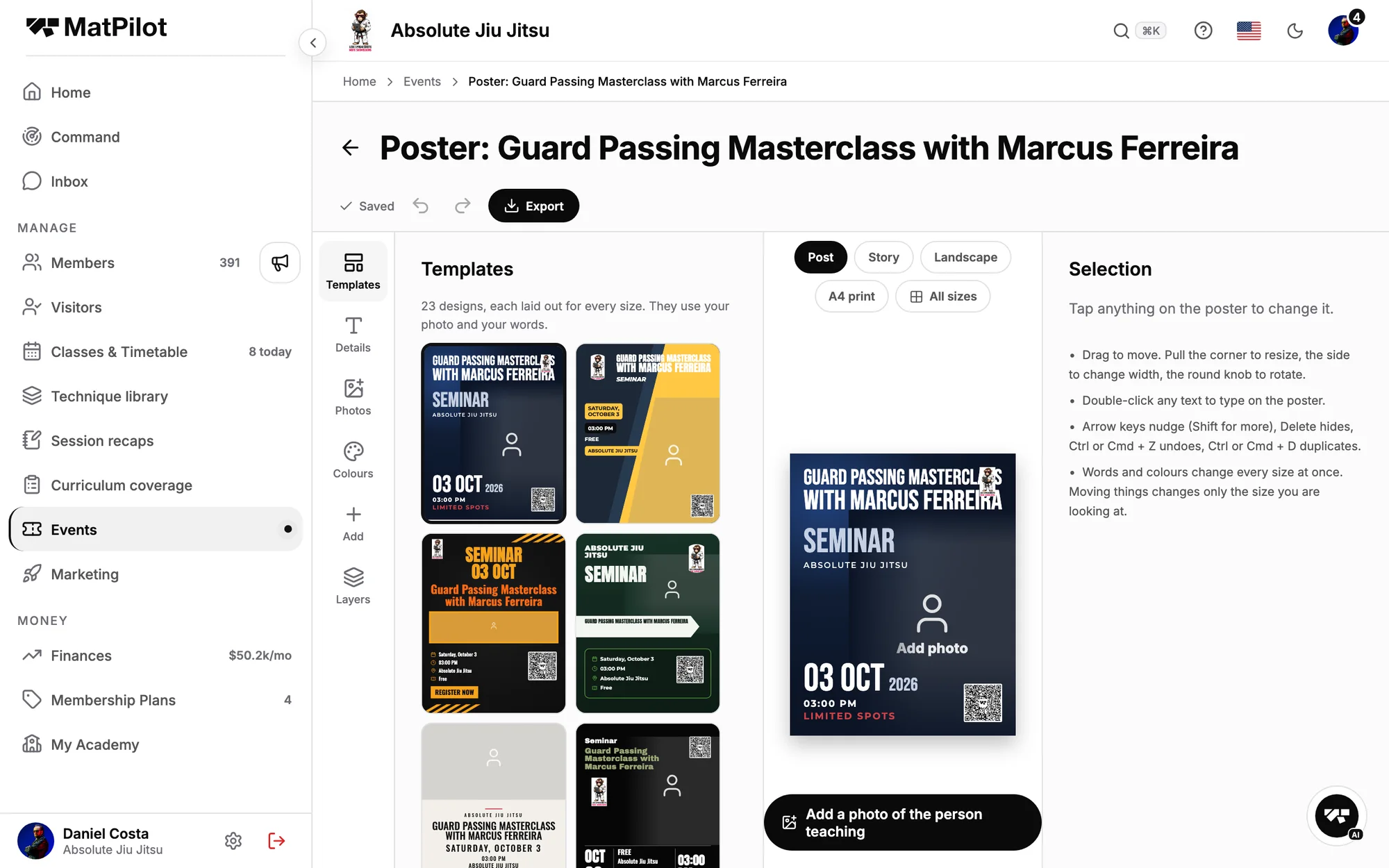
A poster studioTwenty-four designs per size, filled from the seminar's own title, date, price and QR code. Drag, retype, swap the photo, export for Instagram, a story or A4.Read how it works → 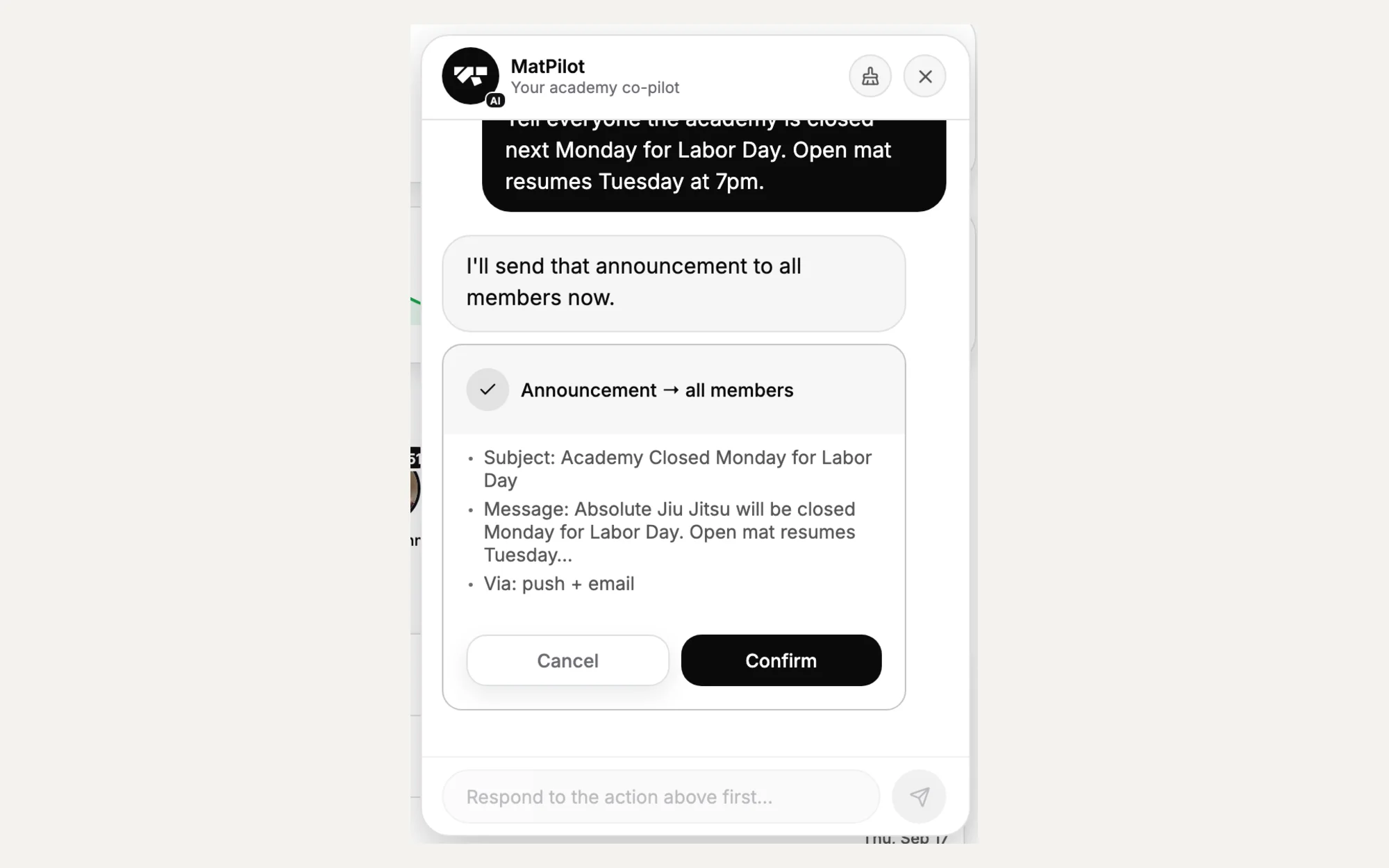
A co-pilot that actsAsk it to announce a closure, cancel a class, add a schedule or chase failed payments. It shows the action, you confirm, it runs.Read how it works → 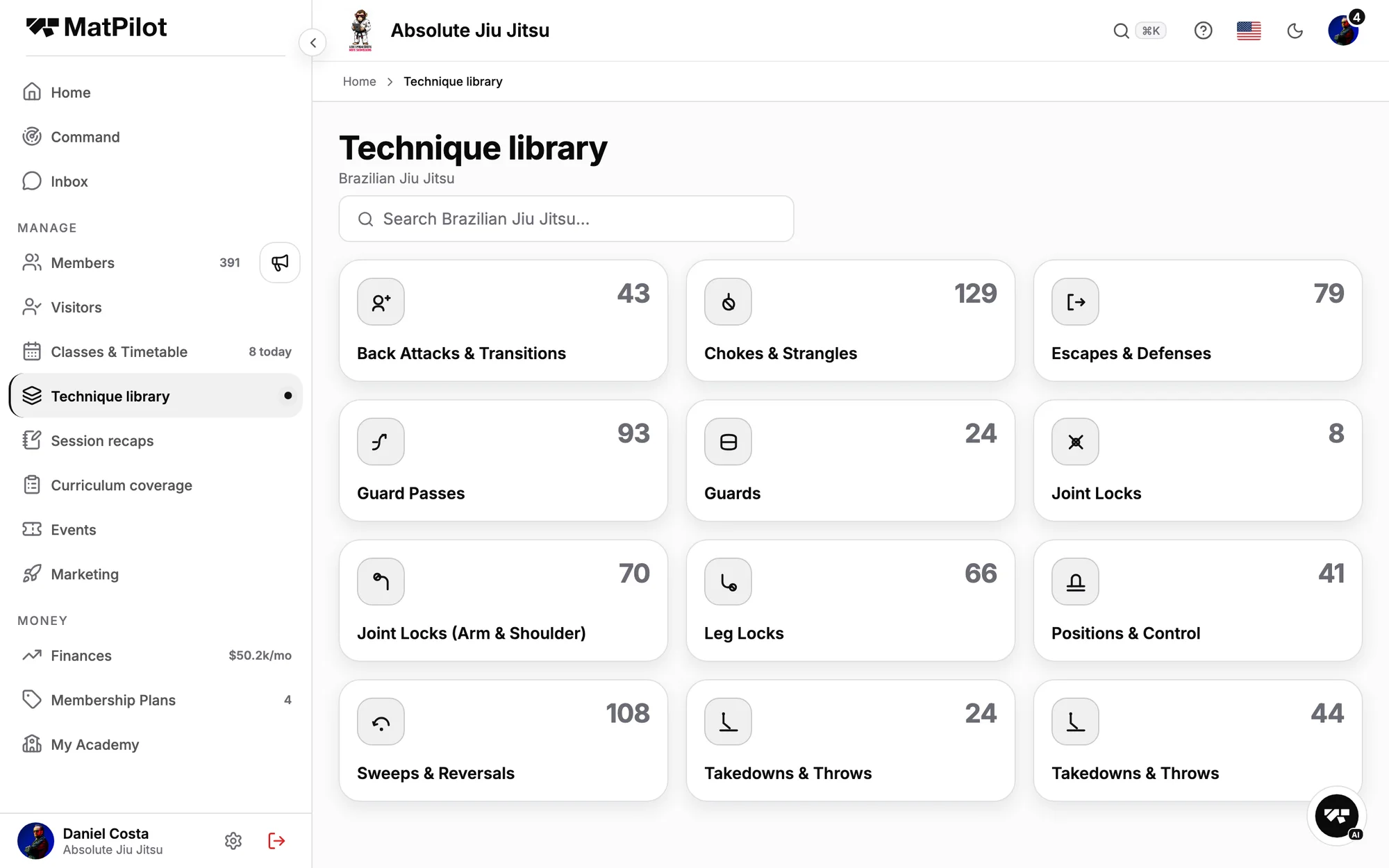
3,700 techniques in a libraryNineteen arts, every move named and linked to its neighbours. Your syllabus points at them, and each student's record fills in as classes are taught.Read how it works → 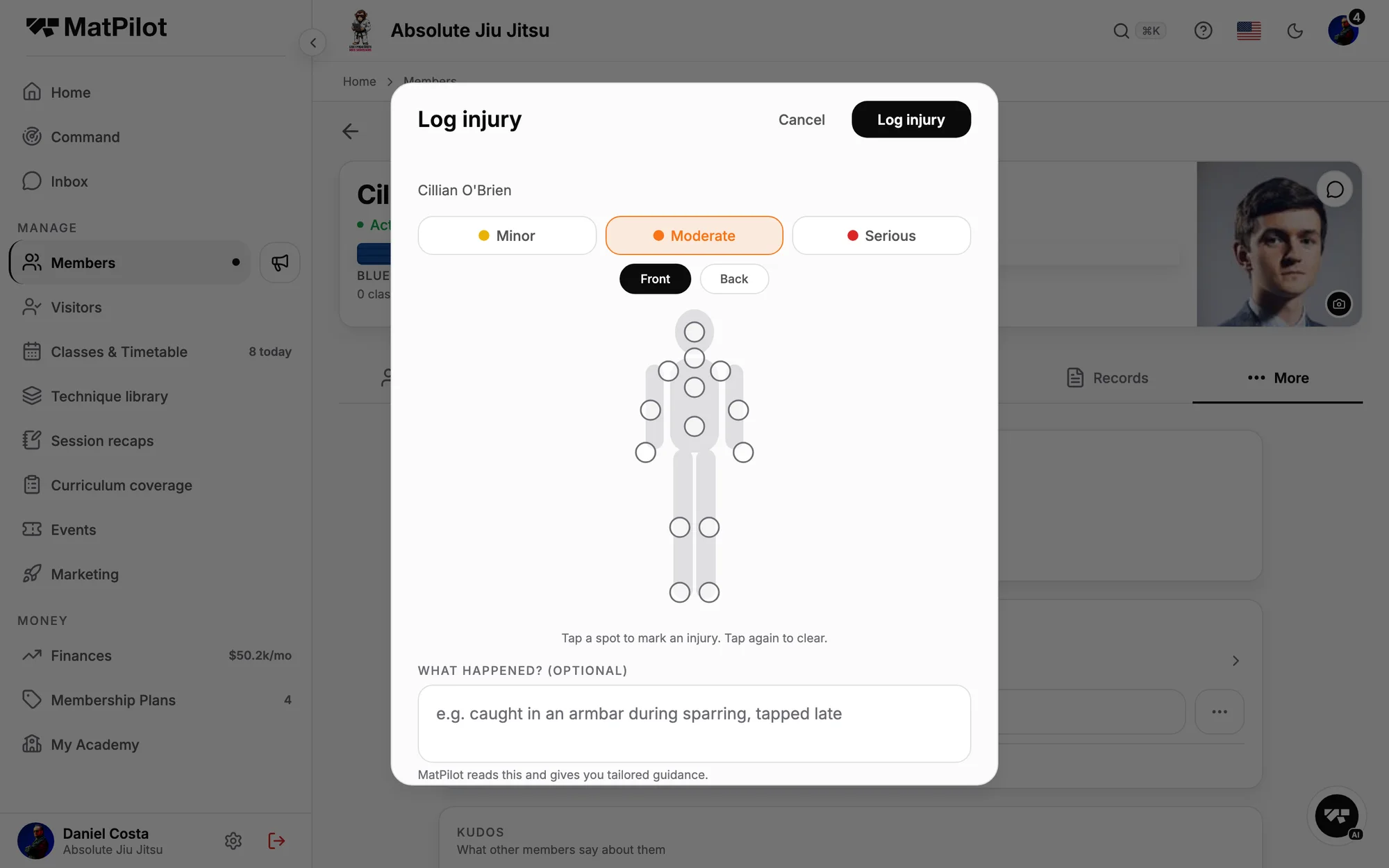
An injury log with follow-upsTap the body map, say how bad. A serious injury schedules staff check-ins at one, three, seven and fourteen days, and billing can pause while they recover.Read how it works → 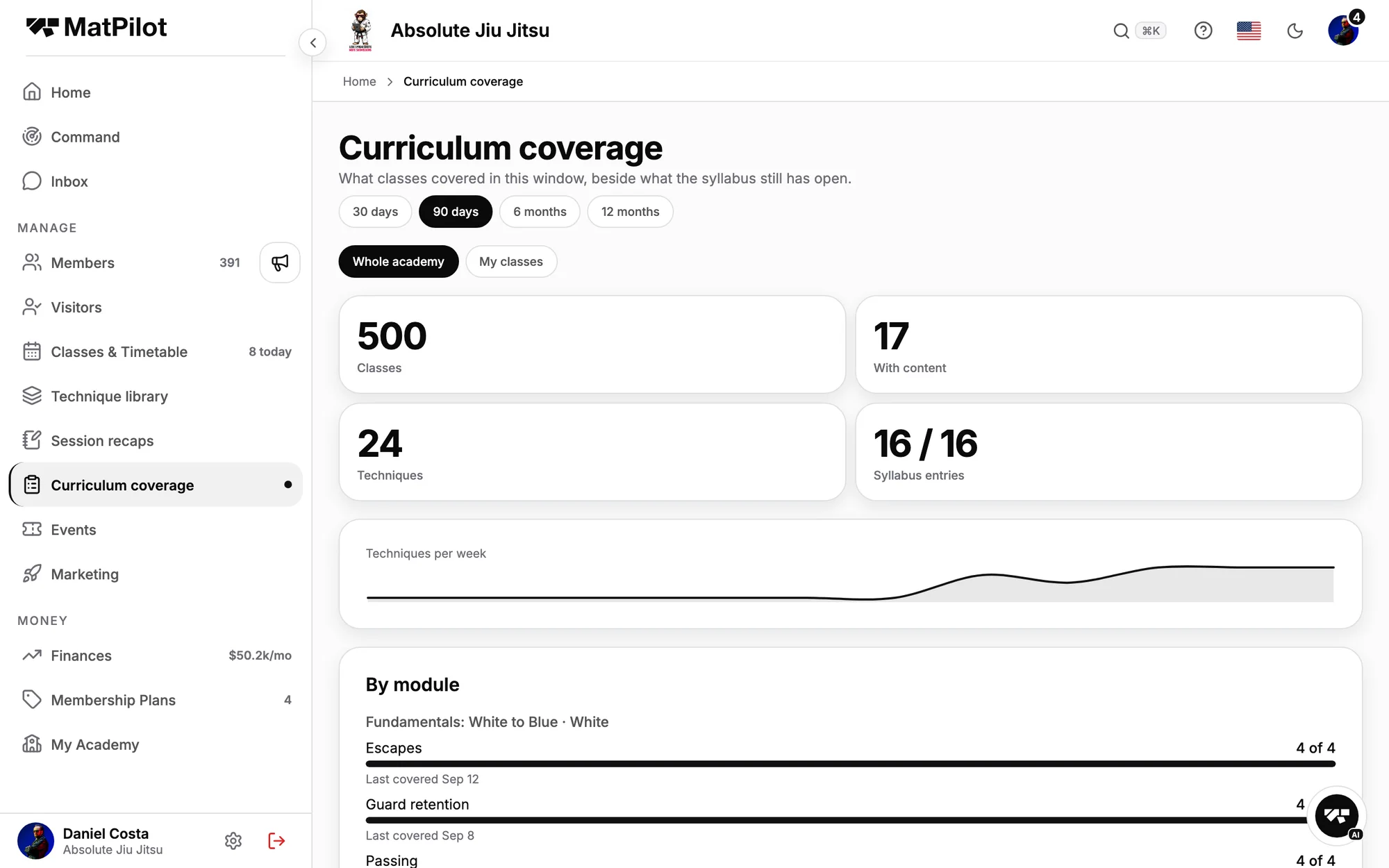
Curriculum coverageWhat the syllabus says, what was actually taught, class by class and belt by belt, so a gap shows before a grading does.Read how it works →
Questions MMA gyms ask
Does every member need a rank in every art?
No. A member carries a rank only in the arts that have one and that they train. A fighter can be a blue belt in jiu jitsu and hold nothing in boxing, which is the truth, and the app shows it that way.
Can a striking-only member book the jiu jitsu class?
Only if their membership covers jiu jitsu. Each class is tagged with its art and each plan or pack says which arts it buys; a booking outside that is refused with the reason, and the member can upgrade from there.
Can a visiting fighter train without joining?
Yes. A single-session pass: they pay, sign your waiver on their phone and check in. They are not a member, do not count towards your totals, and can be invited to join later.
Does the timer do rounds and rest?
Yes. TV mode runs rounds with rest, Tabata, EMOM, countdown and stopwatch, with bell and clapper cues you pick, on any TV with a browser, controlled from a phone.
What does it cost a 60-member a gym?
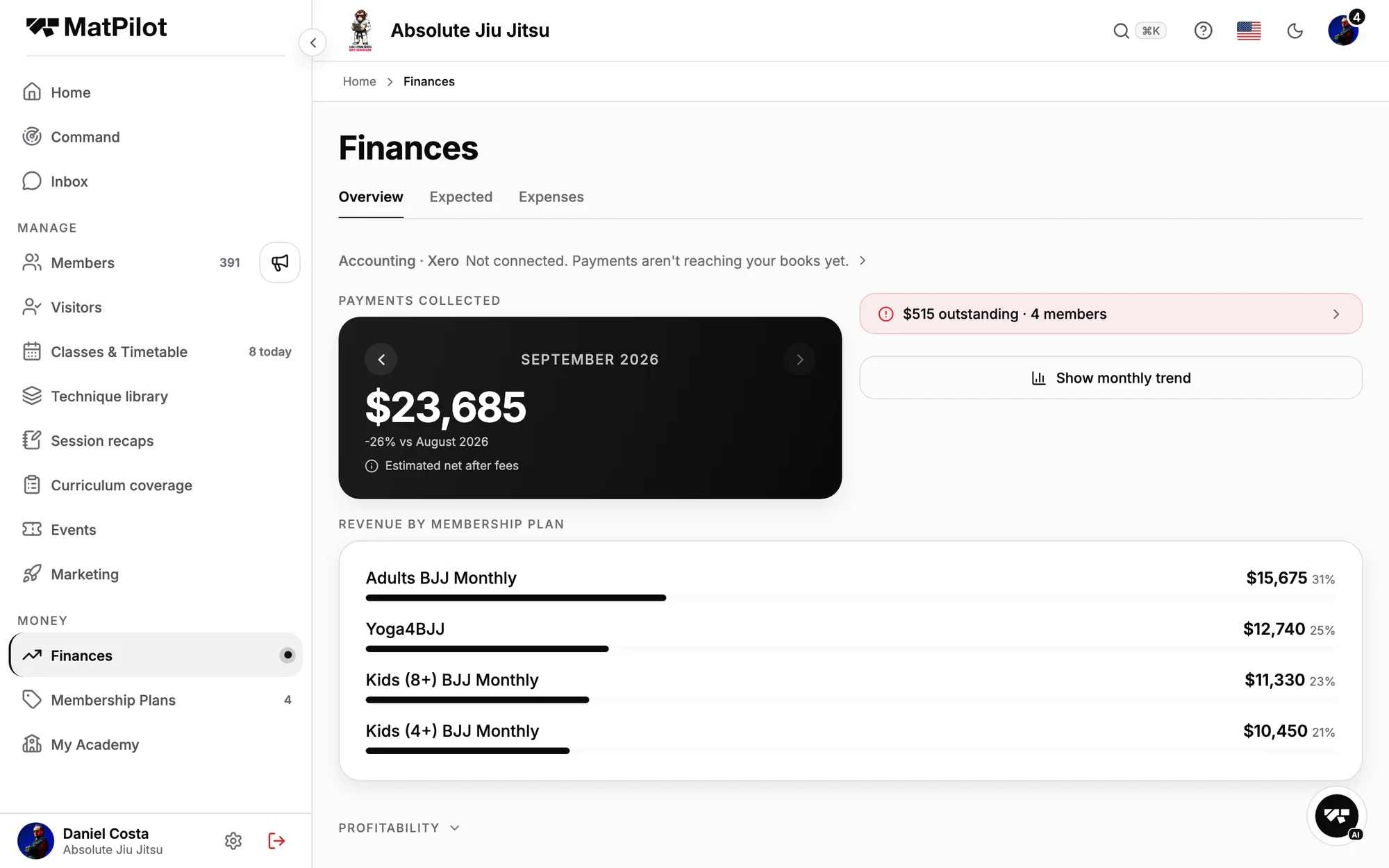
On Pro, $79 a month plus 0.49% of payments taken through MatPilot: about $49 on $10,000 of monthly memberships, plus Stripe's own processing. On the Free plan the platform fee is 2% and there is no monthly charge.
See it with your own roster.
No card required. Import your members from a spreadsheet in an afternoon.